Pearson Invicta II

Pearson Yachts

Pearson Invicta II is a 37.67 ft sloop and yawl sailboat built by Pearson Yachts and designed by William H. Tripp Jr., first produced in 1964. It has displacement of 17,750 lb, a hull speed of 6.7 kt and a centerboard keel.
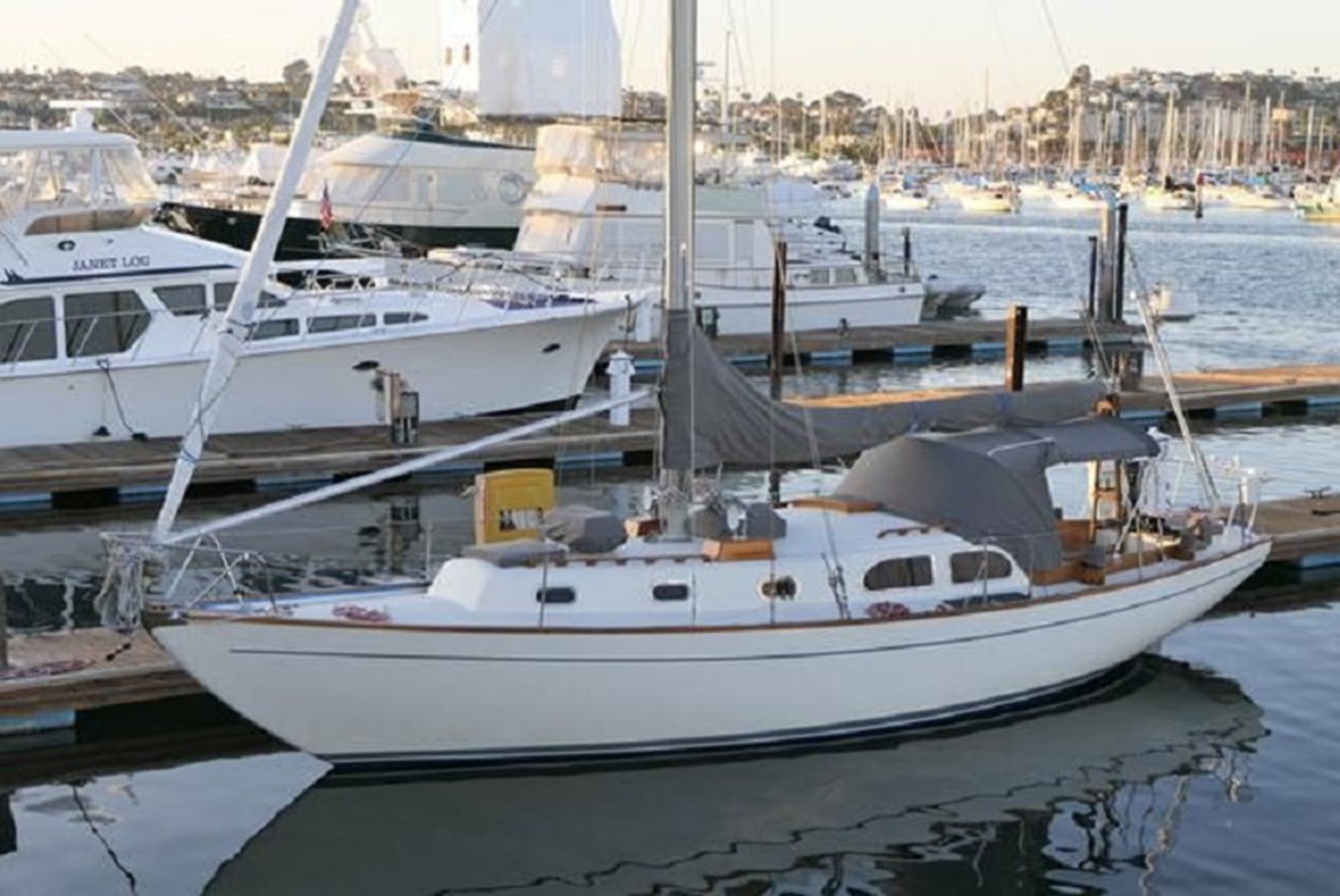
Pearson Invicta II
Verified model photo · Photo source
Community photos are ranked by votes.Add your photo

At a glance

Length
37.67 ft↗
Beam
10.6 ft↗
Draft
  • Standard keel8.6 ft
  • Centerboard keel4.5 ft
↗
Displacement
17,750 lb↗
Ballast
5,650 lb↗
Rig
Sloop and yawl↗
Built
1964–1969↗
Hull speed
6.7 kt

The quick verdict

The Pearson Invicta II suits experienced sailors seeking a classic fiberglass racer-cruiser with shallow-water access. Its retractable centerboard and traditional sail plan offer useful flexibility for coastal cruising, particularly in the Bahamas. Few dedicated reviews exist, although documented owner experience is encouraging. Its greatest purchasing challenge is assessing the condition of a rare, decades-old boat with specialized equipment.

Standardized sailing characteristics

Speed

PHRF 176

Lower PHRF means a faster racing handicap. Published configurations: 156–186. Rig, keel, and region affect ratings.

Reference source ↗

Comfort at Sea

Catalina 22 Mk IIPrecision 28Oceanis 37Catalina 30Island Packet 38Oyster 53
41.04

This boat's motion comfort ratio: a comparison of how gently a design moves at sea. A higher number is gentler. It does not rate cabin space or guarantee comfort.

Capsize screening (CSF)

Catalina 22 Mk IIPrecision 28Oceanis 37Catalina 30Island Packet 38Oyster 53
CSF 1.63

The Capsize Screening Formula: beam compared with displacement. A lower number means a boat is less prone to capsize, so the scale runs from least to most capable offshore; 2.0 or below is the usual guide. It is a screening figure, not a safety guarantee.

Shopping for a boat like this?

Tell us how you'll sail and who's coming along. The Boat Picker asks a few quick questions and shows which boats fit your plans, so you can skip the guesswork.

Try the Boat Picker

Measurements

Rig diagram & sailing measurements

Rig dimension reference
Rig measurement diagram showing I, ISP, J, P, E, PY and EY
General rig reference. PY and EY apply to boats with a mizzen mast.
CSF1.63
Below 2.0: generally meets the traditional offshore screening guideline (not a seaworthiness rating).
Rig dimension I (foretriangle height)41 ft↗
Rig dimension J (foretriangle base)15.2 ft
Rig dimension P (mainsail luff)35.5 ft↗
Rig dimension E (mainsail foot)16.8 ft
Forestay length43.73 ft
Sail area (base / working)609.8 sq ft
Mainsail area298.2 sq ft
Headsail / genoa area311.6 sq ft
Ballast / displacement ratio31.8
Hull speed6.7 kt

All specifications

Production years
1964–1969↗
Designer
William H. Tripp Jr.↗

Dimensions & rating

Length overall
37.67 ft↗
Beam
10.6 ft↗
PHRF
176 (156–186)↗
Displacement
17,750 lb↗
Hull speed
6.7 kt
Draft by configuration↗
Standard keel8.6 ft
Centerboard keel4.5 ft
Rudder type
Skeg-hung↗
Twin wheels
Missing
Rig type
Sloop and yawl↗
Mast step
Missing

Construction

Construction

Hull material
Fiberglass ↗
Hull cored below waterline
No
Keel type
Centerboard ↗
Rudder type
Skeg-hung ↗

Construction & Equipment

Tankage

Fuel capacity
25 gal ↗
US gallons.

Full specifications

Figures link to the page they came from where one is published. Anything not shown is not yet confirmed by a published source.

Identity

Designer
William H. Tripp Jr. seasailmakers.com ↗
First year built
Last year built
1969
Cross-checked against Sailrite and J.D. Power.
Number built
12
Invicta II only, including both rig configurations. Sailrite also reports 12. Original factory production records were not located.
Country built
United States seasailmakers.com ↗
Portsmouth, Rhode Island.
Boat type
Sailing monohull sailcentral.com ↗
Hull type
Monohull

Hull measurements

Length overall
37.67 ft seasailmakers.com ↗
Yawl specification. Sloop specification: 37.9.
Waterline length
25 ft goodoldboat.com ↗
Both rig configurations agree.
Beam (widest)
Draft (standard keel)
8.6 ft goodoldboat.com ↗
Centerboard keel. Board fully lowered.
Draft (alternate keel 1)
4.5 ft goodoldboat.com ↗
Centerboard keel, board raised. Same keel configuration rather than a separate shoal keel.
Draft with board / keel / daggerboards raised
4.5 ft
Cross-checked against Sailrite and US Sailing PHRF.
Hull speed
6.7 kt
Calculated: 1.34 x the square root of the waterline length (25 ft).
Displacement (light / design)
17,750 lb goodoldboat.com ↗
Published design displacement; loading condition not explicitly identified.
Ballast weight
Ballast material
Ballast / displacement ratio
31.8
Calculated: ballast divided by displacement, using the published figures on this page.

Rig and sails

Rig type
Sloop and yawl goodoldboat.com ↗
Both masthead configurations were offered.
Rig options offered
Masthead sloop or masthead yawl sailcentral.com ↗
Alternative factory rigs on the same design. Not separate production marks.
Number of masts
1
Sail area (base / working)
609.8 sq ft
Published main and foretriangle total; excludes mizzen. Other published figure: 567.
Rig dimension I (foretriangle height)
41 ft sailcentral.com ↗
Sloop rig: 40.83. Yawl rig: 39.75.
Rig dimension J (foretriangle base)
15.2 ft
Matches US Sailing PHRF. Other published figure: 15.13.
Rig dimension P (mainsail luff)
35.5 ft sailcentral.com ↗
General specification matching US Sailing PHRF. Sloop rig: 35.67. Yawl rig: 35.
Rig dimension E (mainsail foot)
16.8 ft
General specification matching US Sailing PHRF. Sloop rig: 16.58. Yawl rig: 16.
Headsail / genoa area
311.6 sq ft
100 percent foretriangle area, not actual overlapping genoa area.
Mainsail area
298.2 sq ft
Calculated: half of P x E (35.5 x 16.8 ft), using the published rig dimensions on this page.
Forestay length
43.73 ft
Calculated: the square root of (I squared + J squared), using the published rig dimensions on this page.
Displacement / Length ratio
507.1
Calculated: (displacement in long tons) divided by (0.01 x waterline length) cubed, using the published figures on this page.
Capsize screening value
1.63
Calculated: beam divided by the cube root of (displacement in lb / 64), using the published beam and displacement on this page.
Motion comfort ratio (Brewer)
41.04
Calculated with Brewer's formula from this page's displacement, waterline length, overall length and beam.

Engine, propulsion, systems

Original engine make
Universal seasailmakers.com ↗
Original gasoline auxiliary.
Original engine model
Atomic 4 seasailmakers.com ↗
Gasoline inboard.
Fuel capacity
25 gal sailcentral.com ↗
US gallons.
Original engine power
20 hp sailcentral.com ↗
1967 sloop specification: 30.

Practical ownership

Strengths (sourced)
Shallow-water cruising capability and manageable downwind sail handling. practical-sailor.com ↗
Reported by an Invicta II owner following extended Bahamas and East Coast cruising.
Owners' association link
mail.pearsonyachts.org mail.pearsonyachts.org ↗
General Pearson owners' resource with a dedicated link to Invicta II specifications. Its main specification table describes the earlier Invicta and was not used.

Calculated from the figures above

Sail area / displacement ratio
14.34
Calculated: sail area divided by (displacement in lb / 64) to the power 2/3, using the published sail area and displacement above.
Pounds per inch of immersion (estimate)
946.9
Estimated, not measured: waterline length x beam x 0.67 (typical waterplane coefficient) x 64 / 12, using the published figures above.

Pearson Invicta II problems

Reported by owners and reviewers. Condition varies from boat to boat.

  • An Invicta II owner reported that the boat served successfully as a cruiser during three years of Bahamas and East Coast sailing. ↗

What's on file

Nothing from owners yet. If you own one, you can add a survey or receipts in My boats and help the next buyer.

Surveys and Market Value

No surveys have been contributed for this boat yet.

Community

Sign in

Be the first to comment.