Figures link to the page they came from where one is published. Anything not shown is not yet confirmed by a published source.
Identity
Designer
Finot - Conq and Associates
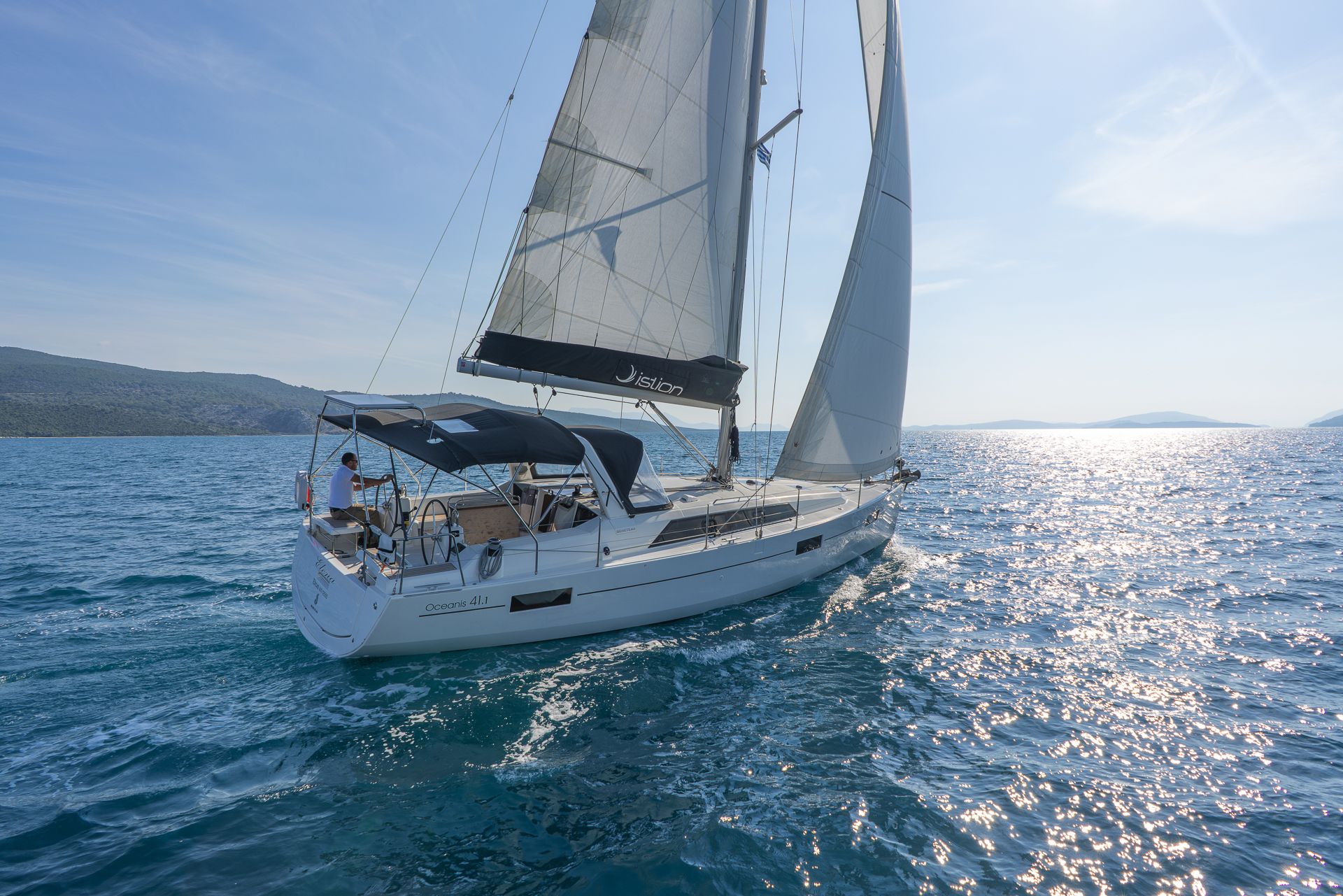
pro.beneteauusa.com ↗Naval architecture by Finot-Conq. Nauta Design designed the exterior styling and interior. This is the Oceanis 41.1 introduced in 2015-2016.
First year built
2015
boat-specs.com ↗Boat-Specs reports construction beginning in 2015. The design was unveiled in December 2015 and launched in North America in February 2016.
Last year built
2022
boattomorrow.com ↗Independent 2026 review reports 2015-2022 production. The 2020 Oceanis 40.1 superseded this design and Beneteau places the 41.1 in its heritage range.
Country built
United States
cruisingworld.com ↗Beneteau's January 2016 North American launch announcement, published by Cruising World, explicitly identifies Marion, South Carolina, as a production location.
Hull measurements
Length overall
40.75 ft
pro.beneteauusa.com ↗Builder's published imperial LOA. Beneteau separately quotes a 39 ft 4 in hull length.
Draft (standard keel)
7.17 ft
pro.beneteauusa.com ↗Deep fin keel with bulb, 2.19 m. The standard deep-keel specification in the manufacturer's North American equipment list. The 5 ft 6 in shoal keel is separately recorded in draft_alt_1.
Draft (alternate keel 1)
5.5 ft
pro.beneteauusa.com ↗Shoal fin keel. Fixed cast-iron fin with bulb, drawing 1.68 m / 5 ft 6 in. The 2019 builder sheet specifies 5,592 lb ballast for this keel, while its 2016 sheet specifies 5,527 lb. This option is independently confirmed by SAIL and Sailing Today.
Air draft (clearance height)
61.92 ft
pro.beneteauusa.com ↗Builder's standard-rig air draft. The optional Performance Pack includes a mast approximately 3 ft 3 in taller; a separately published bridge-clearance measurement for that configuration was not found. Verify the individual mast and fittings for bridge clearance.
Hull speed
8.19 kt
Calculated: 1.34 x the square root of the waterline length (37.33 ft).
Displacement (light / design)
17,271 lb
pro.beneteauusa.com ↗Beneteau's official light displacement, preferred as the design specification. Other published figure: 19350.
Ballast weight
5,071 lb
pro.beneteauusa.com ↗Deep cast-iron bulb keel. Beneteau's September 2019 specifications give 5,592 lb for the shoal keel, whereas its May 2016 equipment list gives 5,527 lb. These are dated specification differences, not documented separate marks.
Ballast / displacement ratio
29.4
Calculated: ballast divided by displacement, using the published figures on this page.
Rig and sails
Rig type
Sloop
boat-specs.com ↗Fractional 9/10 sloop. Standard two-spreader deck-stepped mast, with optional taller performance rig.
Rig options offered
Standard 9/10 fractional rig, in-mast furling option, and Performance Pack extended mast
pro.beneteauusa.com ↗Standard classic mainsail: 430 sq ft. Optional in-mast furling main: 355 sq ft. Standard 106% genoa: 452 sq ft; optional self-tacking jib: 355 sq ft. Performance Pack: taller classic mast, 480 sq ft mainsail, 468 sq ft performance genoa, German mainsheet system and upgraded standing rigging.
Number of masts
1
pro.beneteauusa.com ↗Single-masted fractional sloop. Performance Pack replaces the standard mast with a taller mast, not an additional mast.
Mast material
Aluminium
pro.beneteauusa.com ↗Anodized aluminum mast. SAIL identifies Z-Spars as the mast supplier in its original review.
Mast stepping
Deck-stepped
pro.beneteauusa.com ↗Deck-stepped fractional mast. The compression post is located below in the saloon.
Sail area (base / working)
836.23 sq ft
Geometric working sail area using the mainsail and 100% foretriangle, as required. This differs from the actual builder-listed sails: 430 sq ft standard classic mainsail plus 452 sq ft 106% genoa, totaling 882 sq ft.
Rig dimension I (foretriangle height)
Rig dimension J (foretriangle base)
Rig dimension P (mainsail luff)
50.5 ft
pro.beneteauusa.com ↗Standard mainsail hoist dimension. The performance mast is approximately 3 ft 3 in taller, but Beneteau does not separately state its P dimension in this equipment list.
Rig dimension E (mainsail foot)
Mainsail area
430 sq ft
pro.beneteauusa.com ↗Standard conventional mainsail. Optional in-mast furling mainsail: 355. Other published figure: 480.
Spinnaker / gennaker area
1,388 sq ft
pro.beneteauusa.com ↗September 2019 official equipment list. Largest stated downwind sail, exceeding the 843 sq ft Code 0. Other published figure: 1400.
Forestay length
55.26 ft
Calculated: the square root of (I squared + J squared), using the published rig dimensions on this page.
Headsail / genoa area
452 sq ft
pro.beneteauusa.com ↗106% furling genoa in the builder's standard sail specification. Optional self-tacking jib: 355.
Displacement / Length ratio
148.2
Calculated: (displacement in long tons) divided by (0.01 x waterline length) cubed, using the published figures on this page.
Capsize screening value
2.13
Calculated: beam divided by the cube root of (displacement in lb / 64), using the published beam and displacement on this page.
Motion comfort ratio (Brewer)
21.21
Calculated with Brewer's formula from this page's displacement, waterline length, overall length and beam.
Engine, propulsion, systems
Original engine model
Yanmar 4JH45
svb24.com ↗The model-specific owners' club lists the 4JH45 among installed engines. Beneteau's equipment list confirms a 45 hp Yanmar common-rail diesel but does not explicitly state its model code.
Fuel capacity
53 gal
pro.beneteauusa.com ↗Standard rotomoulded diesel tank. Beneteau explicitly specifies US gallons, avoiding confusion with imperial gallons quoted in some British reviews.
Fresh water capacity
63 gal
pro.beneteauusa.com ↗Standard published freshwater capacity. The equipment inventory identifies a 200 L tank and a 40 L hot-water heater. Optional increased freshwater capacity: 87.
Holding tank capacity
21 gal
pro.beneteauusa.com ↗Factory-stated capacity of the aft starboard holding tank. For optional two-head layouts, an additional forward holding tank may be fitted, but a verified combined total for every configuration was not established.
Accommodation
Cabins
2
pro.beneteauusa.com ↗Two-cabin owner's configuration, with one or two heads depending on the chosen layout. The port aft space provides substantial storage. Three-cabin layout: 3.
Heads (count, enclosed or not)
1
pro.beneteauusa.com ↗Single-head configuration available with either two or three cabins. Other published figure: 2.
Navigation station
Yes
pro.beneteauusa.com ↗Dedicated portside navigation/chart table with electrical controls and provision for navigation electronics. SAIL independently describes a forward-facing navigation desk.
Headroom (saloon)
6.33 ft
pro.beneteauusa.com ↗Builder's saloon headroom. This is not the companionway, galley or cabin measurement.
Practical ownership
Known issues (sourced to magazines / associations)
Limited saloon ventilation, relatively small galley worktop, constrained handholds in the wide cockpit, awkward liferaft locker access, and increasing helm load when pressed.
yachtingmonthly.com ↗Yachting Monthly's independent 2016 review identifies these design limitations. An individual Oceanis 41.1 owner also reported a broken Z-Spars in-mast furling worm in the Oceanis owners' forum, but this is not evidence of a fleet-wide failure.
Strengths (sourced)
Excellent cockpit space, responsive light-air performance, easily handled sail plan, spacious forward owner's cabin, versatile accommodation layouts, and good engine access.
sailmagazine.com ↗SAIL praised light-wind sailing, cockpit ergonomics and the larger owner's cabin. Yachting Monthly independently praised the interior volume and engine access.
Owners' association link
svb24.com svb24.com ↗Model-specific SVB Owner's Club with owner reviews and equipment records. The independent French Oceanis owners' forum also has active Oceanis 41.1 discussions at https://oceanisvoiliers.forumactif.org/f2-informations-et-astuces-oceanis-41-41-1-45-48-46-1.
Calculated from the figures above
Sail area / displacement ratio
20.02
Calculated: sail area divided by (displacement in lb / 64) to the power 2/3, using the published sail area and displacement above.
Pounds per inch of immersion (estimate)
1834.1
Estimated, not measured: waterline length x beam x 0.67 (typical waterplane coefficient) x 64 / 12, using the published figures above.