Hunter 40.5 Legend

Hunter Marine

Hunter 40.5 Legend is a 40.17 ft sloop sailboat built by Hunter Marine and designed by Hunter Design Team, first produced in 1991. It has displacement of 20,000 lb, a hull speed of 7.96 kt and a bulb-wing keel.
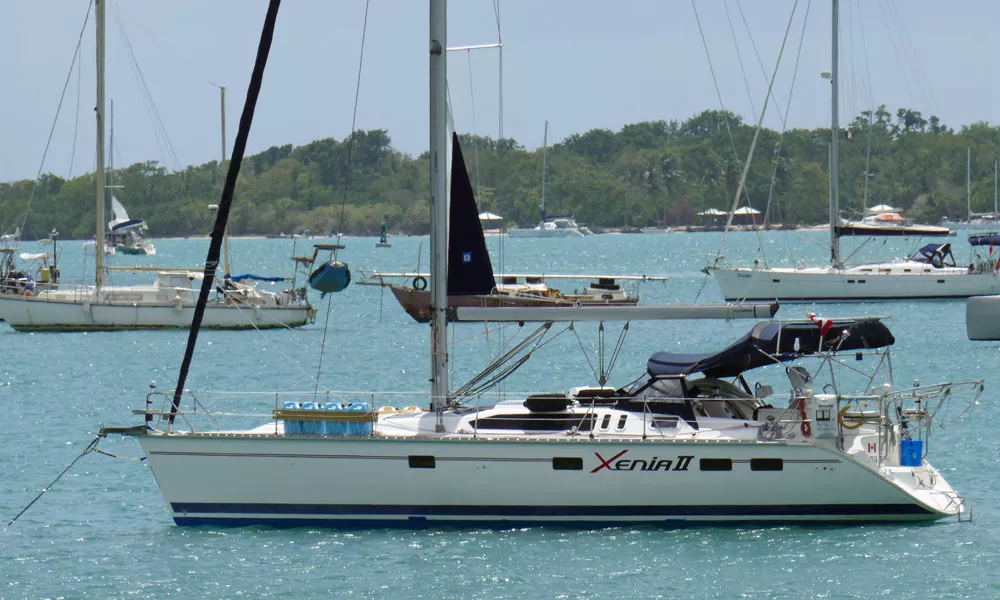
Hunter 40.5 Legend
Sailboat-Cruising.com · Photo source
Community photos are ranked by votes.Add your photo

At a glance

Length
40.17 ft↗
Beam
13.42 ft↗
Draft
4.92 ft↗
Displacement
20,000 lb↗
Ballast
7,000 lb↗
Rig
Sloop↗
Built
1991–1997
Hull speed
7.96 kt
Headroom
6.5 ft↗

The quick verdict

The Hunter Legend 40.5 suits couples and families seeking a comfortable, reasonably priced cruising sailboat with generous living space and manageable sailing characteristics. Its substantial aft accommodation, shallow-draft keel and accessible cockpit make it attractive for extended coastal cruising. The principal buying concern is aging original equipment, particularly aluminium tanks, freshwater tank seals and mast drainage. A well-maintained example with documented upgrades deserves consideration.

Shopping for a boat like this?

Tell us how you'll sail and who's coming along. The Boat Picker asks a few quick questions and shows which boats fit your plans, so you can skip the guesswork.

Try the Boat Picker

All specifications

Production years
1991–1997
Designer
Hunter Design Team↗

Dimensions & rating

Length overall
40.17 ft↗
Beam
13.42 ft↗
PHRF
117↗
Displacement
20,000 lb↗
Hull speed
7.96 kt
Standing headroom
6.5 ft↗
Draft
4.92 ft↗
Keel type
Bulb-wing↗
Rudder type
Spade↗
Twin wheels
No↗
Rig type
Sloop↗
Mast step
Deck-stepped↗

Standardized sailing characteristics

Speed

PHRF 117

Lower PHRF means a faster racing handicap. Rig, keel, and region affect ratings.

Reference source ↗

Comfort at Sea

Catalina 22 Mk IIPrecision 28Oceanis 37Catalina 30Island Packet 38Oyster 53
29.33

This boat's motion comfort ratio: a comparison of how gently a design moves at sea. A higher number is gentler. It does not rate cabin space or guarantee comfort.

Capsize screening (CSF)

Catalina 22 Mk IIPrecision 28Oceanis 37Catalina 30Island Packet 38Oyster 53
CSF 1.83

The Capsize Screening Formula: beam compared with displacement. A lower number means a boat is less prone to capsize, so the scale runs from least to most capable offshore; 2.0 or below is the usual guide. It is a screening figure, not a safety guarantee.

Measurements

Rig diagram & sailing measurements

Rig dimension reference
Rig measurement diagram showing I, ISP, J, P, E, PY and EY
General rig reference. PY and EY apply to boats with a mizzen mast.
CSF1.83
Below 2.0: generally meets the traditional offshore screening guideline (not a seaworthiness rating).
Rig dimension I (foretriangle height)50.33 ft↗
Rig dimension J (foretriangle base)13.25 ft↗
Rig dimension P (mainsail luff)52 ft↗
Rig dimension E (mainsail foot)16.42 ft↗
Forestay length53.21 ft↗
Sail area (base / working)760.4 sq ft↗
Mainsail area426.9 sq ft
Headsail / genoa area333.44 sq ft
Spinnaker / gennaker area566.8 sq ft↗
Air draft (clearance height)63.25 ft↗
Ballast / displacement ratio35.0
Hull speed7.96 kt

Construction

Construction

Hull material
Fiberglass ↗
Hull cored below waterline
No
Deck cored
Yes ↗
Deck core material
Balsa ↗
Hull-to-deck joint
Bonded and bolted ↗
Structural grid / pan liner
Internal hull grid with separate compartments ↗
Keel type
Bulb-wing ↗
Keel material
Lead ↗
Keel attachment
Bolted ↗
Rudder type
Spade ↗
Number of rudders
1 ↗
Steering type
Wheel ↗
Twin wheels
No ↗
Fuel tank material
Aluminium ↗
Fresh water tank material
Fiberglass ↗
Holding tank material
Aluminium ↗

Construction & Equipment

Tankage

Fuel capacity
40 gal ↗
Fresh water capacity
105 gal ↗
Factory manual figure takes precedence over secondary databases. Other published figure: 150.
Holding tank capacity
35 gal ↗
Original tank capacity; replacement installations may differ.

Accommodation

Headroom (saloon)
6.5 ft ↗
Confirmed by the original factory brochure.

Full specifications

Figures link to the page they came from where one is published. Anything not shown is not yet confirmed by a published source.

Identity

Designer
Hunter Design Team manuals.plus ↗
Warren Luhrs participated in the design.
First year built
1991
Last year built
Country built
United States sailboat-cruising.com ↗
Confirmed by the factory's Alachua, Florida address and published production history.
Boat type
Sailing monohull seasailmakers.com ↗
Hull type
Monohull

Hull measurements

Length overall
Waterline length
35.33 ft
Beam (widest)
13.42 ft pacificsailors.com ↗
Confirmed by the original brochure and Robert Perry's review.
Draft (standard keel)
4.92 ft manuals.plus ↗
Bulb-wing keel. The only keel documented in the original factory brochure and manual. Bulb-wing keel: 4.83.
Air draft (clearance height)
63.25 ft pacificsailors.com ↗
Factory mast height above the waterline. Additional antennas, instruments and clearance margins must be considered for bridge passages.
Hull speed
7.96 kt
Calculated: 1.34 x the square root of the waterline length (35.33 ft).
Displacement (light / design)
20,000 lb pacificsailors.com ↗
Nominal design displacement, confirmed by the factory brochure and Perry review. Other published figure: 19775.
Ballast weight
7,000 lb boats.com ↗
Agrees with the factory manual and brochure.
Ballast material
Lead forums.sailboatowners.com ↗
Hunter 40.5 owner describes the design's external ballast casting.
Ballast / displacement ratio
35.0
Calculated: ballast divided by displacement, using the published figures on this page.

Rig and sails

Rig type
Sloop mauripro.com ↗
Fractional rig with swept-back spreaders and a split backstay. The factory standing-rigging specification explicitly documents the backstay.
Rig options offered
Conventional mainsail or optional in-mast furling manuals.plus ↗
Standard full-batten mainsail and optional mast furling. No separately named tall- or short-rig production marks established.
Number of masts
1 mauripro.com ↗
Single-masted sail plan confirmed by the original factory drawing.
Mast material
Aluminium sailboat-cruising.com ↗
Factory brochure lists anodized spars and the manual identifies Z-Spar rigging equipment. The secondary article is AI-assisted and is not relied upon for its contradictory backstay description.
Mast stepping
Deck-stepped martinleaning.co.uk ↗
Also consistent with the factory mast-stepping instructions.
Sail area (base / working)
760.4 sq ft manuals.plus ↗
Factory base sail area. The owner's manual rounds this to 760 sq ft and reports 882 sq ft with actual standard sails. Contemporary review figure: 773.
Rig dimension I (foretriangle height)
50.33 ft mauripro.com ↗
Factory specification is 50 ft 4 in.
Rig dimension J (foretriangle base)
13.25 ft mauripro.com ↗
Factory specification is 13 ft 3 in.
Rig dimension P (mainsail luff)
52 ft mauripro.com ↗
Confirmed by the factory manual.
Rig dimension E (mainsail foot)
16.42 ft mauripro.com ↗
Factory specification is 16 ft 5 in.
Mainsail area
426.9 sq ft
Calculated: half of P x E (52 x 16.42 ft), using the published rig dimensions on this page.
Spinnaker / gennaker area
566.8 sq ft mauripro.com ↗
Sailmaker's cruising spinnaker reference size. Factory maximum spinnaker area was not established; the factory manual documents an optional spinnaker package.
Forestay length
53.21 ft pacificsailors.com ↗
The same standing-rigging table row specifies overall length of 53 ft 2 1/2 in.
Headsail / genoa area
333.44 sq ft
100 percent foretriangle area, not the area of the larger overlapping factory genoa. Cross-checked against MAURIPRO's 333.4 sq ft figure.
Displacement / Length ratio
202.5
Calculated: (displacement in long tons) divided by (0.01 x waterline length) cubed, using the published figures on this page.
Capsize screening value
1.83
Motion comfort ratio (Brewer)
29.33

Engine, propulsion, systems

Original engine make
Yanmar or Volvo seasailmakers.com ↗
Original engine model
Yanmar 4JH2E forums.sailboatowners.com ↗
One of the documented factory engines. Other published figure: Volvo Penta MD22L-B.
Original engine power
50 hp pacificsailors.com ↗
Nominal factory engine rating.
Fuel capacity
Fresh water capacity
105 gal pacificsailors.com ↗
Factory manual figure takes precedence over secondary databases. Other published figure: 150.
Holding tank capacity
35 gal pacificsailors.com ↗
Original tank capacity; replacement installations may differ.

Accommodation

Berths (total)
6 manuals.plus ↗
Standard two-cabin accommodation capacity. Other published figure: 8.
Cabins
2 pacificsailors.com ↗
Standard owner's layout. Other published figure: 3.
Heads (count, enclosed or not)
2 sailboat-cruising.com ↗
Forward and aft heads described separately in the accommodation section and confirmed by the factory layouts.
Navigation station
Yes manuals.plus ↗
Dedicated navigation and electrical-panel area.
Headroom (saloon)
6.5 ft pacificsailors.com ↗
Confirmed by the original factory brochure.

Practical ownership

Known issues (sourced to magazines / associations)
Corrosion of original aluminium holding tanks practical-sailor.com ↗
Verify whether the original waste tank has been replaced. Other published figure: Mast-step leaks and rudder bearing wear. Other published figure: Leaking integral freshwater tank lids. Other published figure: Blocked mast-base drainage. Other published figure: Age-related fuel tank deterioration.
Strengths (sourced)
Easy tacking with a relatively small foretriangle boats.com ↗
Applies to the owner's layout: Spacious aft owner's accommodation. Other published figure: Storage and ventilation.
Owners' association link
legendowners.com legendowners.com ↗
Legend Owners Association includes this model in its manufacturer history.

Calculated from the figures above

Sail area / displacement ratio
16.51
Calculated: sail area divided by (displacement in lb / 64) to the power 2/3, using the published sail area and displacement above.
Pounds per inch of immersion (estimate)
1694.2
Estimated, not measured: waterline length x beam x 0.67 (typical waterplane coefficient) x 64 / 12, using the published figures above.

Hunter 40.5 Legend problems

Reported by owners and reviewers. Condition varies from boat to boat.

  • Corrosion of original aluminium holding tanks ↗
  • A former Hunter 40.5 owner reports overall satisfaction but recommends checking mast-step leakage, rudder bearings and the original aluminium holding tank. ↗
  • Owners report that integral freshwater tanks can leak around their covers and retaining screws, sometimes requiring resealing. ↗
  • An owner replaced the deteriorated fuel tank with a thicker aluminium tank manufactured by the original supplier using its existing drawings. ↗

What the magazines say

Owner experiences and professional commentary are separate sources. Condition varies from boat to boat.

  • Robert Perry identifies the swept-back spreader arrangement as beneficial to rig rigidity, although it limits how far the mainsail can be eased before contacting the spreaders. Read source
  • Practical Sailor identifies the factory aluminium waste tanks as an important used-boat inspection item because of their susceptibility to internal corrosion. Read source

Hunter 40.5 Legend documents

Links to the builder's and other published documents.

What's on file

Nothing from owners yet. If you own one, you can add a survey or receipts in My boats and help the next buyer.

Surveys and Market Value

No surveys have been contributed for this boat yet.

Up to 2 per boat, PDF under 4 MB (larger ones: add them from My boats). This can take up to a minute.

Watch the boat

Big Heavy Sailboats Are Bad - Ep 255 - Lady K Sailing

Watch on YouTube ↗

Community contributions or corrections

Do you have information about this boat, a photo of it, or advice for future owners? Leave a comment below regarding this make and model. For corrections, leave the corrected information with the source so we can investigate and update the boat wiki page.

Sign in

Comments

No comments yet.