Beneteau Oceanis 523

Beneteau

Beneteau Oceanis 523 is a 53.15 ft sloop sailboat built by Beneteau and designed by Jean-Marie Finot, first produced in 2005. It has displacement of 33,069 lb, a hull speed of 9.28 kt and a deep fin with bulb and shoal fin keel.
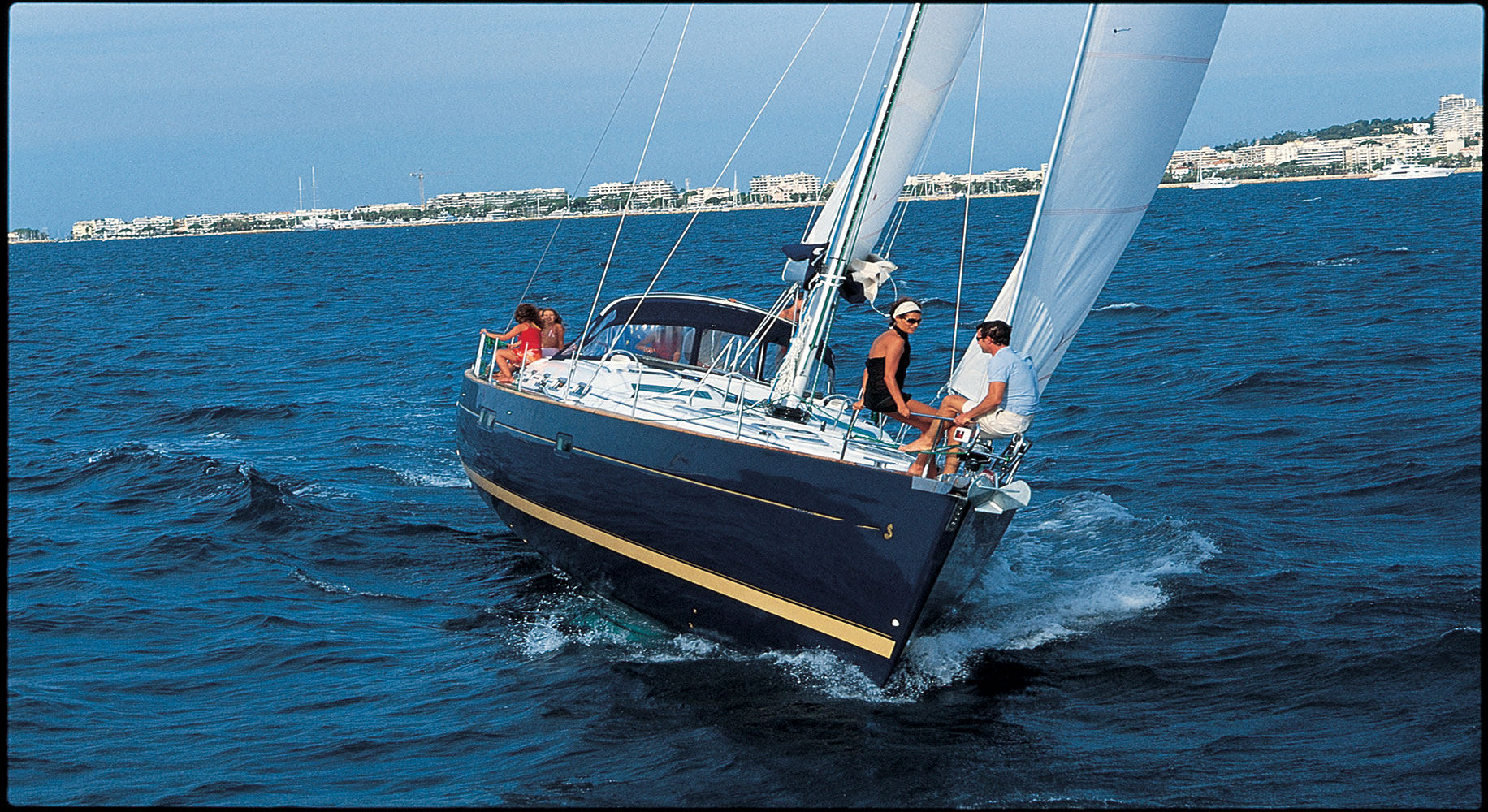
Beneteau Oceanis 523
Beneteau · Photo source
Community photos are ranked by votes.Add your photo

At a glance

Length
53.15 ft↗
Beam
16.01 ft↗
Draft
  • Standard keel7.71 ft
  • Shoal fin keel5.92 ft
Displacement
33,069 lb↗
Ballast
10,965 lb
Rig
Sloop
Built
2005↗
Hull speed
9.28 kt

The quick verdict

The Oceanis 523 suits experienced cruising couples, families and larger crews seeking generous accommodation without sacrificing sailing performance. Its responsive twin-wheel steering and flexible interior layouts are particular strengths. Some interior fittings and navigation ergonomics are less convincing than the sailing characteristics. Buyers should inspect the joinery, refrigeration arrangement and condition of the substantial rigging and deck equipment before committing to this large cruising yacht.

Shopping for a boat like this?

Tell us how you'll sail and who's coming along. The Boat Picker asks a few quick questions and shows which boats fit your plans, so you can skip the guesswork.

Try the Boat Picker

All specifications

Production years
2005↗
Designer
Jean-Marie Finot↗

Dimensions & rating

Length overall
53.15 ft↗
Beam
16.01 ft↗
PHRF
66↗
Displacement
33,069 lb↗
Hull speed
9.28 kt
Draft by configuration
Standard keel7.71 ft
Shoal fin keel5.92 ft
Rudder type
Spade
Twin wheels
Yes↗
Rig type
Sloop
Mast step
Missing

Standardized sailing characteristics

Speed

PHRF 66

Lower PHRF means a faster racing handicap. Rig, keel, and region affect ratings.

Reference source ↗

Comfort at Sea

Catalina 22 Mk IIPrecision 28Oceanis 37Catalina 30Island Packet 38Oyster 53
25.68

This boat's motion comfort ratio: a comparison of how gently a design moves at sea. A higher number is gentler. It does not rate cabin space or guarantee comfort.

Capsize screening (CSF)

Catalina 22 Mk IIPrecision 28Oceanis 37Catalina 30Island Packet 38Oyster 53
CSF 2.00

The Capsize Screening Formula: beam compared with displacement. A lower number means a boat is less prone to capsize, so the scale runs from least to most capable offshore; 2.0 or below is the usual guide. It is a screening figure, not a safety guarantee.

Measurements

Rig diagram & sailing measurements

Rig dimension reference
Rig measurement diagram showing I, ISP, J, P, E, PY and EY
General rig reference. PY and EY apply to boats with a mizzen mast.
CSF2.00
At 2.0: borderline under the traditional offshore screening guideline (not a seaworthiness rating).
Rig dimension I (foretriangle height)65.22 ft
Rig dimension J (foretriangle base)20.77 ft
Rig dimension P (mainsail luff)59.87 ft
Rig dimension E (mainsail foot)22.28 ft
Forestay length68.45 ft
Sail area (base / working)1,344.26 sq ft
Mainsail area667 sq ft
Headsail / genoa area677.31 sq ft
Spinnaker / gennaker area2,309.17 sq ft↗
Air draft (clearance height)73.16 ft↗
Ballast / displacement ratio33.2
Hull speed9.28 kt

Construction

Construction

Hull material
Fiberglass
Hull cored below waterline
No
Hull cored above waterline
No ↗
Hull core material
None (solid laminate)
Deck cored
Yes ↗
Deck core material
Balsa ↗
Structural grid / pan liner
Structural fiberglass hull grid supporting the engine, tanks and rigging ↗
Keel type
Deep fin with bulb and shoal fin
Keel attachment
Bolted ↗
Rudder type
Spade
Number of rudders
1
Steering type
Wheel ↗
Twin wheels
Yes ↗

Construction & Equipment

Tankage

Fuel capacity
118.88 gal ↗
450 litres converted to US gallons.
Fresh water capacity
237.75 gal ↗
Converted from 900 litres to US gallons. 750 litres converted to US gallons: 198.13. American magazine specification: 250.
Holding tank capacity
89.82 gal ↗
Optional four-tank configuration listed in the manufacturer's load table. Combined capacity of 340 litres, equivalent to 89.82 US gallons. Individual tanks hold approximately 22.45 US gallons. Actual installed capacity depends on accommodation and equipment configuration.

Full specifications

Figures link to the page they came from where one is published. Anything not shown is not yet confirmed by a published source.

Identity

Designer
Jean-Marie Finot beneteau.com ↗
Groupe Finot.
First year built
2005 boats.com ↗
Contemporary December 2004 announcement identifies the 523 as a new model scheduled for unveiling in January 2005. This establishes the public launch, not necessarily the exact first hull construction date. Other published figure: 2001.
Country built
France canadianboating.ca ↗
Firsthand factory visit identifies the production facility in St Gilles, France.
Boat type
Sailing monohull
Single-hull cruising sailboat.
Hull type
Monohull

Hull measurements

Length overall
53.15 ft boats.com ↗
Contemporary launch specification. Other published figure: 53.31.
Length on deck
52.13 ft boats.com ↗
Published hull length, used as the deck-length equivalent. Not explicitly labelled length on deck.
Waterline length
48 ft
The Beneteau 523 and Oceanis Clipper 523 database entries agree.
Beam (widest)
16.01 ft boats.com ↗
The Clipper entry gives 4.90 metres.
Draft (standard keel)
7.71 ft
Deep fin keel. Deep fin keel: 7.87.
Draft (alternate keel 1)
5.92 ft
Shoal fin keel. The Beneteau 523 database entry independently repeats this figure.
Air draft (clearance height)
73.16 ft manuals.plus ↗
Original manufacturer's owner's manual. Allow additional clearance for masthead equipment. No independent numerical confirmation located.
Hull speed
9.28 kt
Calculated: 1.34 x the square root of the waterline length (48 ft).
Displacement (light / design)
33,069 lb boats.com ↗
Contemporary launch specification. Alternative published displacement: 30864.
Ballast weight
10,965 lb
The Beneteau 523 database entry agrees. Magazine search results report lower ballast figures, but those passages were not sufficiently verified to establish separate entries or their keel configurations.
Ballast / displacement ratio
33.2
Calculated: ballast divided by displacement, using the published figures on this page.

Rig and sails

Rig type
Sloop
Fractional rig.
Rig options offered
Conventional mainsail, in-mast furling mainsail and optional inner forestay for staysail sailingmagazine.net ↗
The original owner's manual independently provides separate conventional and furling mast sail plans. These are equipment options rather than successive production marks.
Number of masts
1
Single-mast configuration confirmed by manufacturer's exterior photographs.
Sail area (base / working)
1,344.26 sq ft
Theoretical mainsail and 100 percent foretriangle area. Contemporary launch specifications give 1625 square feet without specifying the headsail percentage.
Rig dimension I (foretriangle height)
65.22 ft
Agrees with the Beneteau 523 database entry.
Rig dimension J (foretriangle base)
20.77 ft
Rig dimension P (mainsail luff)
59.87 ft
Rig dimension E (mainsail foot)
22.28 ft
Spinnaker / gennaker area
2,309.17 sq ft manuals.plus ↗
Conventional spinnaker, as indicated by the spinnaker pole in the factory running-rigging plan. Largest spinnaker area documented in the owner's manual, identical for conventional and furling mast configurations. No independent matching numerical specification located.
Forestay length
68.45 ft
Calculated: the square root of (I squared + J squared), using the published rig dimensions on this page.
Headsail / genoa area
677.31 sq ft
100 percent theoretical foretriangle, not an independently measured factory genoa.
Mainsail area
667 sq ft
Calculated: half of P x E (59.87 x 22.28 ft), using the published rig dimensions on this page.
Displacement / Length ratio
133.5
Calculated: (displacement in long tons) divided by (0.01 x waterline length) cubed, using the published figures on this page.
Capsize screening value
2.00
Calculated: beam divided by the cube root of (displacement in lb / 64), using the published beam and displacement on this page.
Motion comfort ratio (Brewer)
25.68
Calculated with Brewer's formula from this page's displacement, waterline length, overall length and beam.

Engine, propulsion, systems

Original engine make
Yanmar cruisingworld.com ↗
Confirmed independently by Canadian Boating and Yachting World. Other published figure: Volvo.
Original engine model
Yanmar 4JH yachtingworld.com ↗
Engine family explicitly identified in the contemporary review. Exact model suffix not independently verified. Canadian Boating confirms a turbocharged 100 HP Yanmar.
Fuel capacity
118.88 gal boats.com ↗
450 litres converted to US gallons.
Original engine power
100 hp
The contemporary launch specification gives 100 metric horsepower as maximum engine power.
Fresh water capacity
237.75 gal canadianboating.ca ↗
Converted from 900 litres to US gallons. 750 litres converted to US gallons: 198.13. American magazine specification: 250.
Holding tank capacity
89.82 gal manuals.plus ↗
Optional four-tank configuration listed in the manufacturer's load table. Combined capacity of 340 litres, equivalent to 89.82 US gallons. Individual tanks hold approximately 22.45 US gallons. Actual installed capacity depends on accommodation and equipment configuration.

Accommodation

Berths (total)
4 boats.com ↗
Minimum accommodation configuration in contemporary launch specifications. Other published figure: 12.
Cabins
2 boats.com ↗
Owner-oriented accommodation configuration. Other published figure: 5.
Heads (count, enclosed or not)
2 boats.com ↗
Owner-oriented accommodation configuration. Other published figure: 5.
Navigation station

Practical ownership

Known issues (sourced to magazines / associations)
Limited navigation instrument space, vulnerable interior joinery and awkward refrigerator access when heeled yachtingworld.com ↗
Contemporary review observations rather than established recurring structural defects.
Strengths (sourced)
Responsive steering, good sailing performance and flexible cruising accommodation yachtingworld.com ↗
Contemporary sailing trials were conducted in light conditions.
Owners' association link
oceanisvoiliers.forumactif.org oceanisvoiliers.forumactif.org ↗
Independent French-language Beneteau owners' forum with a dedicated discussion section shared by Oceanis 473 and 523 owners.

Calculated from the figures above

Sail area / displacement ratio
20.88
Calculated: sail area divided by (displacement in lb / 64) to the power 2/3, using the published sail area and displacement above.
Pounds per inch of immersion (estimate)
2746
Estimated, not measured: waterline length x beam x 0.67 (typical waterplane coefficient) x 64 / 12, using the published figures above.

Beneteau Oceanis 523 problems

Reported by owners and reviewers. Condition varies from boat to boat.

  • Limited navigation instrument space, vulnerable interior joinery and awkward refrigerator access when heeled ↗

What the magazines say

Owner experiences and professional commentary are separate sources. Condition varies from boat to boat.

  • Yachting World found the twin-wheel steering unusually responsive during light-wind sailing trials. Read source
  • Canadian Boating found the 523 easy to handle in Bay of Biscay conditions, with little weather helm during its upwind sailing trial. Read source
  • Cruising World recommended securing the flush-fitting cabin floorboards before undertaking offshore passages. Read source
  • SAILING Magazine preferred the deep-draft keel for sailing performance and motion unless shallow-water access was essential. Read source

Beneteau Oceanis 523 documents

Links to the builder's and other published documents.

What's on file

Nothing from owners yet. If you own one, you can add a survey or receipts in My boats and help the next buyer.

Surveys and Market Value

No surveys have been contributed for this boat yet.

Up to 2 per boat, PDF under 4 MB (larger ones: add them from My boats). This can take up to a minute.

Watch the boat

Abandon Ship! Coast Guard Rescue Beneteau 523 in the Atlantic

Watch on YouTube ↗

Community contributions or corrections

Do you have information about this boat, a photo of it, or advice for future owners? Leave a comment below regarding this make and model. For corrections, leave the corrected information with the source so we can investigate and update the boat wiki page.

Sign in

Comments

No comments yet.